Clicking on any embedded ad is appreciated... for it helps support the costs of our Canonsburg Friends sites.

Friday, December 20, 2024

WHEN CHRISTMAS WAS ALMOST... HISTORY


At the beginning of the 19th century, the celebration of Christmas in the English-speaking world was in a state of disrepute and dis favor. 

Observing the festival had been banned by Puritan governments in Scotland, England, and the New England colonies, and even when it became legal again to mark the holiday, Christmas had become Stripped of its religious significance by Enlightenment freethinkers.

In the cities of Great Britain and the United States, the Twelve Days of Christmas were marked by vandalism, interruption of church services, attacks on religious and racial minorities, and urban gangs bent on mayhem. 

But just when Christmas seemed on its last legs, the first decades of the 1800s saw the festival almost miraculously revived by writers, poets, musicians, and thinkers in America and England.
 

In the United States we must thank, among others, the writer Washington Irving and members of the New-York Historical Society.


It was these well-off gentlemen who looked to the history of Dutch settlement in New York and found the figure of Sinterklaas (Saint Nicholas), who they said was a magical Christmas gift-bringer who brought treats for good little girls and boys and switches to paddle the bottoms of bad children. 


The poets, who wrote “Account of a Visit from St. Nicholas,” better known as “’Twas the Night Before Christmas” (1822), popularized a fur-clad figure who arrived on Christmas Eve in a reindeer-pulled sleigh full of gifts.


Meanwhile in England, Charles Dickens was refashioning ideas about the sacred season. In his “A Christmas Carol” of 1843, Dickens linked old notions of the holiday as a time of mid-winter jollity and community to the idea of the festival as the feast of family togetherness and forgiveness.

The resurrection of Christmas also owes much to the example of Queen Victoria and the British royal family as celebrators of a family-centred Christmas.

The German background of her husband, Prince Albert, contributed greatly: his importation of the Christmas tree, emphasis on domestic togetherness proved an enormously attractive model for middle-class folk who now sought to emulate their monarch.
Now, In the 21st century we still observe Christmas in ways that Washington Irving, the New-York Historical Society, Charles Dickens, and Queen Victoria would find familiar and approve... of.

Monday, January 3, 2022

Parade for Departing Local Youth

September 14, 1942 - Daily Notes

162 young men depart for Army Service


A parade of local draftees and supporters on their way to Train Station

Parade of inductees marching down Jefferson Ave.
past Colaizzo Beer Garden on way to train station


Friday, November 20, 2020

Wednesday, October 21, 2020

George Washington Visits Canonsburg

George Washington

In September, 1784, Washington traveled into western Pennsylvania to survey property near Venice, Pa and Mt. Pleasant township thawarded him for his service in the French and Indian War.


click to enlarge
A "Historical Marker" sets on the property, 2813 acres located near the intersection of PA 980 & PA 50 within the Town of Venice.

The following link provide a fuller story regarding this GW's property:https://explorepahistory.com/hmarker.php?markerId=1-A-28F

During this September, 1784 journey, George Washington would spend an extended weekend in Canonsburg.

1796 portrait

The below article published in the Daily Notes, on Friday,  April 18th ,1919 documents a part of George Washington's three day weekend visit, in September, 1784.  During his stay, he lodged at the home of the Town founder John Canon.  

George Washingtonfive years later, in 1789, would become the first President of the United States of America.

Washington, both the city and county were named after the American Revolutionary War leader. 

The Town of Canonsburg was formally defined and laid out by Colonel John Canon in 1789.


Jim Herron's article regarding G. Washington visit to Canon's Burg:
March 1968 - Jefferson College Historical Society Issue:


Tuesday, October 13, 2020

Alhambra Theater

Alhambra Theatre

10-14 E. Pike Street,
 Canonsburg, PA 15317

Originally called "The Please U Theatre"  which opened in 1907.    On September 16, 1912 it was renamed Alhambra Theatre and for an additional 50 years continued as the town's most popular family entertainment  venue.  (click on images to enlarge) 


This painting, titled: "Catching The Trolley: Canonsburg 1939" by Jim Sulkowski shows the Alhambra and Pollock's Shoe Store with a trolley out front.  Here the people are lined up to buy tickets for the newly released "Gone With The Wind" playing at the Alhambra. 


An admission ticket and a coming attraction ad. 


The Alhambra closed in 1964.


Thursday, October 1, 2020

Four Coins Sing

Four Coins Sing 
(click on any of the links below to listen to song)

Canonsburg. Pa - 1923

The Northeast corner of the intersection of Pike Street and Central Ave. back in 1923.Pictured here is the "Olde Emery Tavern", a local stagecoach stop.
1923 - Photograph by Force C. Dunlevy


Jefferson Historic Society

Canonsburg Review of Year 1950


The Daily Notes - January 1, 1951

A Chronological Review of 1950

The Daily Notes, the local the local paper of the time. published this  three(3) page historical account of the year 1950.


Click on the links below to view each of the 3 pages in pdf format.

Note: use your PDF viewer to adjust text reading size.


Page 1 (January 1 - May 10)


Page 2 (May10 - October 16)


Page 3 (October 17 - End of Year)


Friday, November 30, 2018

PRICELESS....Old Schools, OLD BLACK BOARDS


From: Dick Garboski 
Fri, Nov 30, 2018 at 12:53 PM
Re: PRICELESS....
To: Dave Delanie

Definitely interesting the discovery of those old blackboards still intact behind those walls... 
Makes me wonder what must have been lost when Canonsburg tore down those many great old buildings that housed the schools of our time?
Dick Garboski 


On Fri, Nov 30, 2018 at 5:49 AM Dave DeLanie  wrote:
This is most interesting , have a look!                 DD

PRICELESS....OLD BLACK BOARDS
Contractors began work on four classrooms of Emerson High School in Oklahoma City, they knew their remodel would improve education - but they never expected it would impact local history. 

This what they found hidden.
Cg3lyiW.jpg
Looking to upgrade the rooms with new whiteboards and smart boards, the workers had to first remove the outdated chalkboards. But when they began to pull away the old boards, they made a startling discovery

N7BWeqG.jpg
Beneath the current boards rested another set of chalkboards - untouched for nearly 100 years. Protected and totally undisturbed, the century-old writings and drawings looked like they were made just yesterday. Here, a November calendar rolls into December. A turkey marks the celebration of Thanksgiving.
Look at the top of this blackboard below!
XwvXzBn.jpg
A multiplication table gives us a glimpse into the curriculum and methods taught in 1917, techniques perhaps lost in the passage of time. When regarding a wheel of multiplication, Principal Sherry Kishore told The Oklahoman, "I have never seen that technique in my life."

Rd8wR0w.jpg
But Oklahoma City school officials aren't just shocked by what is written, but how it is written. Penmanship like this is clearly a lost art. This board reads, "I give my head, my heart, and my life to my God and One nation indivisible with justice for all."

0Uehmi1.jpg
Within each of the four rooms, the subject matter and lessons mirrored one another - indicating, as an Oklahoma Public School Twitter caption reads, "aligned curriculum in 1917."

yEnEtYU.jpg
And though the boards' style and subject matter might be unfamiliar to younger folks, they certainly resonate with older generations. Principal Kishore told The Oklahoman what it was like to show her 85-year-old mother the boards: "She just stood there and cried. She said it was exactly like her classroom was when she was going to school."

5bx5gZO.jpg
But these boards actually predate Principal Kishore's mother by 13 years. Two dates were found on the boards: November 30, 1917, and December 4, 1917.

ULNYPPo.jpg
Some of the writings and drawings were done by students, while others were made by teachers - but I'm not always clear whose is whose.

qMHj37z.jpg
Regardless, the work is a striking look into days long gone. While reading the boards - like this one listing "My Rules To Keep Clean" - the past comes alive in a very personal way.

y6tY3lt.jpg
English teacher Cinthea Comer told The Oklahoman, "It was so eerie because the colors were so vibrant it looked like it was drawn the same day. To know that it was drawn 100 years ago. it's like you're going into a looking glass into the past."

blIAmub.jpg
Built in 1895, Emerson High School has seen many renovations and improvements throughout the years - but nothing like this has ever been discovered.

gOqQ1Gb.jpg
When removing old chalkboards in the past, contractors have only found broken pipes and wires, so this is a shocking surprise. Oklahoma City and the school district are now working to preserve these beautiful boards.

ED1EdPa.jpg
Hopefully, the spirit of these teachers and their students will be enjoyed for many years to come. Who knew that scribbles on a chalkboard could become such a precious piece of history.

Wednesday, July 26, 2017

The best Pittsburgh Pirates by decade, 1920-2017


The best Pittsburgh Pirates by decade, 1920-2017 

Ralph Kiner was in beast mode before beast mode was even a thing

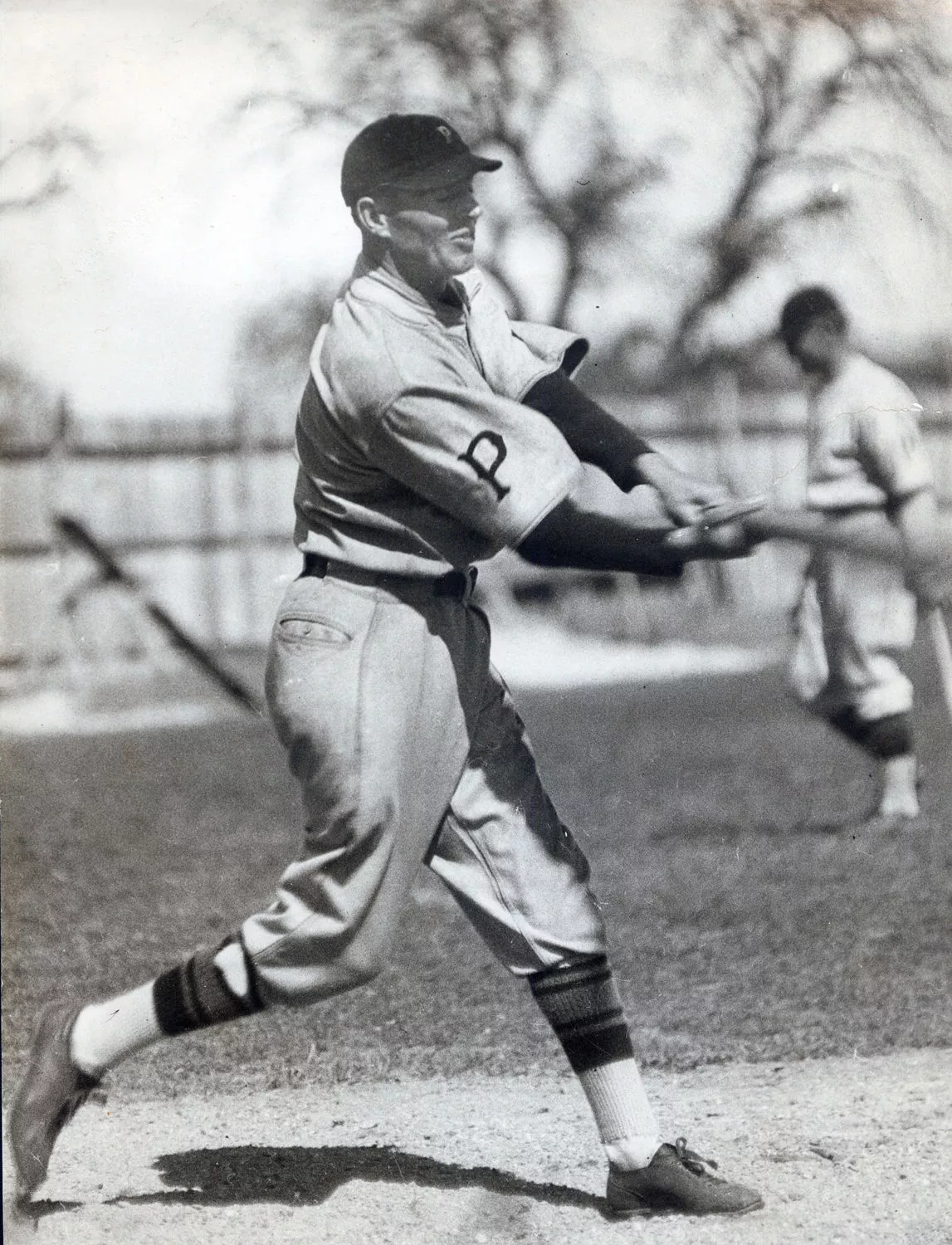
Pie Traynor
click to enlarge
Pie Traynor
Pittsburgh is full of it — civic pride, that is. Any time someone outside the 412 mentions Michael Keaton, Wiz Khalifa or Christina Aguilera, we are sure to remind them from where they came.
However, one celebrity we don’t brag about enough is award-winning playwright August Wilson. The pride of the Hill is a certifiable legend in literature and on Broadway. All of his outstanding plays took place in the sequential decades of the 20th century, and is known as the Pittsburgh Cycle. Since cycle is also a baseball term, it made me start thinking about the best Pittsburgh Pirates by decade. So, with a nod to Wilson, here are the best Pittsburgh Pirates over the past 10 decades — the Pirates Cycle.
The 2010s
If anyone wants to argue that Andrew McCutchen isn’t the greatest Bucco of this decade, I will fight you. Meet me outside the Galleria Mall tomorrow at noon; I’ve got a couple of other fights already scheduled there. 
Cutch ushered in an era of hope and change as the leader and catalyst for a resurgent franchise. Three consecutive postseason appearances seemed like something that would never happen. This season he has his team back in a division race. Early in the 2017 campaign, the former MVP was called washed up by many, but now he is hitting bigly. The latest surge will hopefully put an end to all the rumors of him being traded soon. So far this decade, the Pirates are a winning franchise at 614-567.
The 2000s
This was one of the worst decades in team history. A revolving door of managers led the Pirates to a cumulative 681-936 record. Yes, the team almost lost 1,000 times in 10 years, but at least Jason Bay did a heckuva job. In this decade, we also started checking the Pirates box scores on our phones instead of the newspaper. But that just meant we got the bad news a lot quicker. But our stadium sure looked nice.
The 1990s
Barry Bonds only played three seasons with Pittsburgh in the 1990s, and two of them were MVP years. Pittsburgh loved Sophie Masloff, stonewashed jeans and listening to Paulsen and Krenn in the morning. The last decade at Three Rivers Stadium started with a bang but ended with a thud. Jim Leyland got out of town and won a World Series in Miami, and we never saw another winning season for 20 years. The ’90s were a mixed bag as the team went 774-780. Close to .500 but no cigar (a phrase that would take on a whole new meaning in the 1990s, thanks to Bill Clinton).
The 1980s A brutal decade as the steel mills laid off more than 150,000 workers. All the Atari games and Rubik’s Cubes in the world couldn’t distract us as the city slid farther into decline. The Pirates were no help lifting spirits, as some of the players spent time in court on cocaine charges. On the field, the nose candy wasn’t exactly enhancing anyone’s performance as the team floundered with a 732-825 record. One bright spot was the maddeningly consistent hitting of Bill Madlock. The Mad Dog won two batting titles in 1981 and 1983 and was the only bright spot for fans who had seen much better days.
The 1970s 
The best decade for Pirates fans by far. The Bucs won six division titles and two World Series trophies. People were smoking cigarettes on buses, in restaurants and in libraries. But nobody cared because they were drunk or on ’ludes and heading to the red-light district on Liberty Avenue. Hall of Famer Willie Stargell ruled the decade, with honorable mentions to Dave Parker (who actually smoked in the dugout) and Al Oliver. While disco music blared from 8-tracks in wood-paneled station wagons, the Pirates went a staggering 916-695.
The 1960s 
Roberto Clemente won 12 consecutive Gold Gloves and threw more runners out from right field than anybody in history. No, you weren’t tripping — those lasers were real. A solid decade (848-755) at Forbes Field where opposing teams couldn’t get anything past the team’s second-best player of the decade, Bill Mazeroski. Who, as we all know, started the turbulent ’60s off with the biggest clutch hit of all time.
The 1950s
Yes, Dick Groat won the MVP in 1960, but his 1950s were pretty good too. But the Pirates certainly were not. The Bucs lost 100 games three times and finished 307 games under .500 (616-923). Your grandparents liked Ike, but nobody could dig the Pirates, daddio. There was only one winning season in the decade, so now maybe people can understand how improbable the 1960 World Series win was.
The 1940s 
Ralph Kiner led the league in home runs for a remarkable seven straight seasons from 1947-52. He was in beast mode before beast mode was even a thing. Returning GIs from the last major war we ever won witnessed a new power-hitting phenomenon. 
The 1930s 
Not even Paul Waner, Lloyd Waner or Arky Vaughn could lift the spirits of people during the Great Depression. Paul Waner was the best of a very good class. Big Poison hit .300 in 13 of his 14 seasons in the “Smoky City.” His lifetime .340 average with Pittsburgh is the all-time highest and very likely will never be broken. For the decade, the Pirates were a very respectable 812-718.
The 1920s
A bar in McKeesport is rumored to have coined the phrase “speakeasy.” Which meant “keep quiet about the hooch or some copper will pinch you, see.” You couldn’t drink at the games legally, but the Pirates and Pie Traynor roared through the decade and won it all in 1925. Flappers, Hollywood and the Pittsburgh crime family all had a pretty good decade. 877-666 was their record with no losing seasons. Unfortunately, the Pirates wouldn’t even sniff a World Series for 35 years.

Monday, July 10, 2017

Sam’s Pizza... a mainstay... an institution.

Family owned Sam’s Pizza is mainstay of community

MINOLTA DIGITAL CAMERACurrent ownership, David and Kimberly Rhome and Rege and Marti Passante, took over the shop 17 years ago.
One typically associates Canonsburg, Pennsylvania with the big three: Perry Como, Bobby Vinton and Sarris Candies. There is, however, a forth that locals know and have carried with them across the country and in some cases, the world. That institution is Sam’s Pizza.
In business for over forty-five years, Sam’s Pizza shares the same wall space with neighboring Sarris in East End, Canonsburg. I’m not quite sure if anyone still knows the words to ‘Blue Velvet,’ but I guarantee they’ve had a slice or two of Sam’s pizza in the past twenty years.
Current ownership, David and Kimberly Rhome and Rege and Marti Passante, took over the shop 17 years ago growing it into a Canonsburg mainstay.
“We don’t deliver, so we get to know the customers when they come in,” stated Marti Passante. “We have come to share people’s life cycles through the increases and decreases in the size of their orders.”
On-hand customer, Terry Yost echoed that thought, “Our family has had four generations coming in to get pizza. We started with only a couple pieces and now we are up to a full tray when the family is over.”
When asked why Sam’s Pizza, Ms. Yost replied, “It’s consistent. Always good and I don’t have to cook!”
It’s this kind of interaction that the Rhome and Passante families have built. The two families operate the business themselves with no manger and a total hands-on approach. The core of their business? Customer service.
“We’re only as good as our people and we care about our community. It’s where we work, live and play,” reinforced David Rhome, who is also the town’s Mayor. “Our employees start with us at 15 years of age and work up until they enter college, then come back and pick up hours between semesters. They become part of our family.”
The commitment to community goes far beyond pizza. All money collected in tips goes to charities such as cancer research, feeding the underprivileged and homeless outreach.
Then there’s the pizzas and subs, of course.
MINOLTA DIGITAL CAMERAThe square cuts of Sicilian pizza are old style Italian with ingredients that are never frozen nor recycled.
Sam’s Pizza has won countless awards over the years including 2008 “Best of Washington County.” The square cuts of Sicilian pizza are old style Italian with ingredients that are never frozen nor recycled.
“We pride ourselves in our homemade sauce and dough which is made daily,” said Kimberly. “We even make our own meatballs.”
The shop has such a loyal following that people even make the trip from out of town with Sam’s being one of the must make stops. There is even a customer who frequents from Florida and calls ahead when landing on the tarmac at Pittsburgh International Airport to ensure his order is ready on arrival.
Additionally, tray of Sam’s Pizza have been shipped across the country and even around the world. Customers can simply call in the order, UPS picks up the pizza(s) and off they go. There is a special process that Owner David Rhome describes as “recook” that ensure the pizza is as fresh as it is coming out of the shop’s ovens when reheated after shipping.
In addition to pizza, Sam’s offers a full variety of subs and beverages on site.
In closing, the next time you hear someone humming ‘Catch a Falling Star,’ ask them if they’ve had a slice of Sam’s. I guarantee they have.
To experience some of the best pizza you’ll ever have, visit Sam’s Pizza at 525 Adams Avenue, Canonsburg, PA 15317, 724-745-9861.
They are also on the web at: samspizzacanonsburg.com
_______________________________________________________________
Story by Fred Terling for Pennsylvania Bridges

Thursday, July 6, 2017

John McMillan

Add caption

John McMillan (1752–1833) was a prominent Presbyterian minister and missionary in Western Pennsylvania when that area was part of the American Frontier. He founded the first school west of the Allegheny Mountains, which is now known as John McMillan's Log School. He is one of the founders of Washington & Jefferson College


Biography
McMillan was born on November 11, 1752 in Fagg's Manor, Chester County, Pennsylvania. 

McMillan was described as large man, with a height of 6 foot and weighing 200 pounds in his middle age. His voice was described as strong and "swarthy". He was a Federalist and opposed the Whiskey Rebellion.  McMillan served in the militia in Captain James Scott's Company of the Third Battalion of the Washington County Military. He was ordered to duty on May 8, 1782 and received "donation farm" in Mercer County from the government for his service. He was related to Captain William Fife who was a captain during the Revolutionary War from western Pennsylvania.

McMillan collected money to build the Canonsburg Academy in Canonsburg, Pennsylvania and transferred his log cabin students there. He is also considered a founder of the Pittsburgh Academy (later University of Pittsburgh as well as the Pittsburgh Xenia Theological Seminary and the Western Theological Seminary. All told, he educated over 100 ministers and preached 6,000 sermons. James Carnahan, President of Princeton University, said that he had aided church and education "more than any other man of his generation."

The building in its first Canonsburg location on the campus of Jefferson Academy


John McMillan's Log School is a landmark log building in Canonsburg, Pennsylvania that was a frontier latin school during the 1780s. 
The school grew into Canonsburg Academy, which eventually developed into Washington & Jefferson College. In 1930, 
The Pittsburgh Press said that the building was "viewed by the pioneers with even more reverence than Pittsburgh now view the towering Cathedral of Learning in Oakland."


In 1949, the Pennsylvania Historical and Museum Commission installed a historical marker on U.S. Route 19, near Pennsylvania Route 519, south of Canonsburg noting McMillan's historic importance. In 1949, the Pennsylvania Historical and Museum Commission placed a marker adjacent to Hill Church and in 1951, adjacent to Bethel Presbyterian Church, both churches founded by McMillan. His last remaining kin are the Smiths of Avella Pennsylvania.


Thursday, March 17, 2016

Carl E. Subrick Obituary


Carl E. Subrick, 74, of Lewes, Del., formerly of Canonsburg, passed away Monday, March 14, 2016, in Delaware Hospice Center, Milford, Del., surrounded by his loving family.   He was born August 2, 1941, in Canonsburg, a son of the late Carl and Ann Gomber Subrick.Mr. Subrick was born and raised in Canonsburg. He was a 1959 graduate of Canon-McMillan High School and a 1963 graduate of Carnegie Mellon University, where he earned his degree in chemical engineering.He had resided in Delaware since 1976, when he relocated for work. Mr. Subrick was a hard worker who enjoyed spending time with his family, especially watching sports. He was a wonderful father and grandfather and will be sadly missed. 
On October 23, 1965, he married Barbara J. Burke Subrick, who passed away July 22, 1983.
Surviving are four loving sons, Michael P. (Denise) Subrick of Rehoboth, Del., James D. (Kristin) Subrick of Lewes, John Robert "Bob" (Tamara) Subrick of Harrisonburg, Va., and Joseph William "Bill" (Tammy) Subrick of Milton, Del.; three precious grandchildren, Karra, Burke and Dasia Subrick; a sister, Judi (John) Matok of Pittsburgh; and several nieces, nephews and cousins.
Friends are welcome from 2 to 5 p.m. Friday in Salandra Funeral and Cremation Services Inc., Joseph P. Salandra, owner/supervisor, Lin Webb, funeral director, 304 West Pike Street, Canonsburg, 724-745-8120, where departing prayers will begin at 9 a.m. Saturday, March 19, followed by a Mass of Christian Burial at 9:30 a.m. in St. Patrick Roman Catholic Church, 317 West Pike Street, Canonsburg. Interment will follow in Calvary Cemetery, Pittsburgh.
To extend or view condolences, visit www.salandrafunerals.com.
Funeral Home
Salandra Funeral and Cremation Services, Inc. 
304 West Pike St
CanonsburgPA 15317
724-745-8120  mohttp://www.legacy.com/obituaries/observer-reporter/obituary.aspx?n=carl-e-subrick&pid=178080649&fhid=23241#sthash.Q1HUTR2i.dpuf

Sunday, February 21, 2016

A History of Canonsburg, Pa.


from: A History of Washington County, Pennsylvania
By: Earle R. Forrest
Published By The S. J. Clark Publishing Company, Chicago 1926

------------------------------------------------------
CANONSBURG.
The first settler and proprietor of the Town of Canonsburg was John Canon, after whom the place is named. Colonel Canon settled in this section of the Chartiers valley about 1773, and for many years was one of the leading citizens of Washington County. In May, 1780, he was granted Virginia certificates for 1,200 acres of land in four tracts called Mount Airy, Abbington and Canon's Hill, on Chartiers Creek, and Sugar Tree Grove some distance away. About 1781 he erected a mill on Chartiers Creek which was one of the first in that section. This mill has already been mentioned in other sections of this work. The author is informed by Mr. David H. Fee, editor of the Canonsburg Notes and the best informed man on the history of that borough. that this mill stood on the site of the present mill of the Canonsburg Milling Company, which was erected about 100 years or more ago. John Canon has been mentioned frequently in the Indian wars and the early settlement of the county and needs no further introduction. He derived his title of colonel from his appointment in 1777 as a colonel of the Washington County militia.

In 1787 Colonel Canon laid out the first town plat of Canonsburg. with the main road, now Pike Street, as the central or main thoroughfare. On March 15, 1787. he sold the following lots: No. 3. to Dr. Thompson; No. 4, to Daniel McCoy: No. 5, to James Morrison; No. 6, to David Gault; No. 7, to Donald Cameron; Nos. 9 and 10. to Andrew Monroe, all on the west side of Market, now Pike Street; and Nos. 11. 12 and 13, on the same side of the street, to John Todd, June 1, 1787. On the east side of Market Street the following lots were sold on March 13. 1787: No. 3, to Capt. Craig Ritchie; No. 4, to Col. Matt Ritchie; No. 5, to William Marshall; No. 6, to Abraham DeHaven.

No date is on the next plat, but it was between 1790 and 1800. During this period we find the following to be some of the property owners: Abraham DeHaven, Dr. Hugh Thompson, Daniel McCoy, shoemaker; John McDowell, David Gault, tanner; Thomas Speers, merchant; Dr. Thomas B. Creaghead. Andrew Munroe. tavern keeper; Jefferson Academy, John Todd, cooper; Charles White. hatter; William Webster. carpentcr; James Foster. brewer: William Criswell. weaver; Ann Cook, Elizabeth Andrews, Adam Johnson, weaver: Robert Bowland, miller; Craig Ritchie, Esq., Matthew Ritchie. Esq. William Thompson, mason; John McGill, George McCooke. James Witherspoon. William Roberts. William McCall; John Anderson, carpenter; James Morrison. butcher; Thomas Morrison, tailor; J. Alex Miller, cooper; John Miller, schoolmaster; Samuel Miller. Dell Weaver, mason; David Ralston, stiller.

Canonsburg is the oldest incorporated municipality in the county, its charter dating from February 22, 1802, eight years before the borough of Washington was incorporated. At an election held May 3, 1802. in the college, the following were elected as the first officers: Samuel Murdoch, burgess; William Clarke, Thomas Briceland. William \Vhite, John Johnson, and John Wattson, council; and John McGill. high constable. The first meeting of council was held May 6, 1802.

A market house was erected in Canonsburg on Main Street(now Central Avenue) below the college grounds, before the first meeting of council; and on May 6, 1802. Andrew Munroe was appointed clerk to have entire charge. An ordinance regulating the sales in the market was passed March 19, 1804; and on June 4, 1808, it was ordered that the stalls be rented at $1.50 per annum. This market stood for a number of years, the exact time not being known. On August 25, 1820, council moved that it be razed and a new one erected, but this was held in abeyance until May 16, 1821, when it was voted down. The building stood for some years after that date.

The "Hibernia," a hand fire engine, was purchased by council in 1829, and it was used in the big fire of 1835; and in February, 1836, a volunteer fire company was organized. This existed for several years and was then discontinued for lack of attendance. Later the engine was sold for $35. In recent years two fire companies were organized, one with quarters in the borough building and the other on Ridge Avenue, both being supplied with fire fighting equipment. Canonsburg's worst disaster was the big fire of November, 1898, when several business buildings in Pike Street were destroyed with large loss. It was necessary to use dynamite finally to stop the progress of the fire. Among the buildings destroyed was the borough building, which was replaced in 1899 by a new pressed brick building of two stories.

The first tavern kept in Canonsburg was by Andrew Munroe, who was licensed at the October term, 1787. This was located at the southwest corner of Main and College streets and was kept by him until 1801, and Jennet Munroe succeeded him until 1805, when it ceased. In December, 1790, William Dehaven was licensed to keep a tavern, and Abraham Dehaven in 1791. Francis Irwin kept a tavern from June, 1793 to 1801.

Henry Westby, the proprietor of the Black Horse Tavern, famous as the meeting place of the Whisky Insurrectionists in 1794. was licensed in January of that year. He remained as proprietor until 1814. when he moved to Washington and was succeeded by his son, John, who conducted it for many years. This was Canonsburg's most noted tavern of the early days.

Briceland's Tavern was probably the most noted in all Canonsburg's history. This old building stood on the present site of the Citizens Trust Building, and was a landmark of the town for many years. The date of the erection of this building and by whom is not known; but when the old Washington-Pittsburgh Pike was at the height of its glory, in the days before the Chartiers Valley Railroad was completed in 1871, this tavern was a famous stand. Its history began back in the '40s and extended through a period of thirty years or more. It was conducted for many years by John Briceland, son of Thomas Briceland, one of the town's first residents, and from him this stopping place received its name. For years before the Civil war it was the popular stopping place for all visitors at college events, and on the muster days of the militia it was headquarters for military men. During the Civil war all soldiers gathered there when preparing to go to the front or when passing through the town on furlough. When Company G, of the famous One Hundred and Fortieth Pennsylvania Volunteer Infantry, Canonsburg's own company, returned at the close of the Civil war, the survivors were welcomed home at a big banquet in this tavern. It continued as the town's principal hotel under the name of Sherman House and Central Hotel until it was razed in 1903 to make room for the trust building.

McFadden's Tavern at the corner of Central Avenue and East College Street was opened by Hector McFadden in November, 1822, and kept until 1835. During those years it was a popular place, especially for college students. This building is still standing.

For ten years, beginning with 1819, William Finley kept a tavern on the site of the old opera house. As early as 1794, David Lock and Mary Hill were licensed to keep a tavern. Others who were licensed to keep taverns in the early years of the past century were George Sellers, in 1806; John Patterson, in 1809; John Lowry and Joshua Emory, in 1810.

In January, 1811, Rev. D. D. Graham advertised that he would give instructions in rhetoric, belles-lettres and the science of philology. The first schoolhouse of which we have a record was erected of brick in 1816 by subscription of a number of prominent citizens. This school was in operation for a number of years, and among some of the early teachers as far back as 1828 were Samuel Hindman, John Hindman, Samuel Guess, John Roberts, Mrs. Rankin, Mrs. Grier, Joseph Gray, Samuel G. MeNeill, Nancy Knox, Mary Ray, Davis Bascom, Thomas Wilson, Hugh Sturgeon, John Strean, Robert Curry, Benjamin South and William G. Fee.

When Chartiers Township adopted the school code in 1834, the schools of Canonsburg were a part of that district and remained so until 1857, when it became a separate district. The old town hall, built in 1843 by the borough on the site of the old stone college, was used by the district of Chartiers and Canonsburg for about thirty years. The old brick schoolhouse mentioned above stood for seventy-seven years.

A brick school of four rooms was erected in the '70s, and at that time it was large enough to house all of the pupils of the town. At the present time Canonsburg is an independent district with F. W. McVay as the superintendent. In addition to a school nurse, supervisor of music and two assistant teachers it has twenty-five teachers in the Central Schools; a principal and sixteen teachers in the First Ward School; a principal and seventeen teachers in the Third Ward School; four teachers in the White Lawn School, and a principal and twelve teachers in the new high school. The total number of teachers is seventy-eight with a total of 3,237 pupils, and an average daily attendance of 2,900. The assessed valuation of the property of the district is $4,534,385, and the amount of taxes collected for school purposes last year was $132,031.90 at 26 mills.

On September 18 to 21, 1784, Gen. George Washington visited Canonsburg in connection with the claims of squatters on his lands in Mount Pleasant Township. This is the only time that General Washington was ever in this county.

On September 5, 1817, James Monroe, President of the United States, visited Canonsburg and was escorted into the town by Miller's Company of Light Infantry and a number of men on horseback. He was entertained with refreshments at Emorys' Tavern on the corner of Pike Street and Central Avenue, after which he visited Jefferson College, where speeches were made.

President Grant passed through Canonsburg once while on his way to visit W. W. Smith in Washington.

On July 4, 1866, the Eureka baseball team of Pittsburgh defeated the Mechanics team of Canonsburg by a score of 50 to 15; and on July 21,, 1866, the Jefferson College nine of Canonsburg defeated the Hygeia Club of Pittsburgh by a score of 67 to 17.

William McEwen was the first person in Canonsburg to use natural gas in his residence. This was in the spring of 1885.

On December 9, 1885, the residence of Wesley Greer, at the corner of Central Avenue and Pike Street, was wrecked by an explosion of natural gas. Mr. and Mrs. Greer, two small children and Mr. Greer's mother were in the house and were injured, but not seriously. Fire broke out immediately after the explosion, and the house was destroyed.

The worst flood in the town's history was on the night of August 21, 1888, when the bridge at Houston, the bridge at the foot of Central Avenue and many buildings were carried away by the waters of Chartiers Creek. No trains were run on the Chartiers Railway for nearly a week.

During the winter of 1850-51 a young man named Wilson was killed in a fight between college students and boys of the town. Someone plunged a knife into young Wilson. A student named Ammon was implicated in the affair, but he made his escape. Another student named Robinson was arrested and tried in Washington, but was acquitted.

On December 31, 1925, the plant of the Standard Chemical Company, manufacturers of radium, was damaged by fire to the amount of $40,000. The origin was unknown. In this connection it is interesting to note that the Standard Chemical Company, located at Canonsburg, which is the largest manufacturing plant for radium in the world, was started about 1911 through the efforts of the late Joseph Flannery, of Pittsburgh. From the very beginning the plant has been in charge of L. F. Vogt, of Washington, a chemist and metallurgist, and one of the foremost authorities on radium in the United States. This is the pioneer plant in this country for the manufacture of radium, which is obtained from carbonite which is shipped from Colorado. where this company owns extensive mining operations for this valuable mineral. In appearance it resembles yellow sandstone, the yellow appearance being caused by uranium. The ore contains such a small amount of radium that it cannot be reckoned on a percentage basis, and it takes up to 500 tons of ore to produce a single gram of radium. Up to 1921 a total of 120 grams of radium, valued at $14,400,000, covered the world's supply of this preciouS mineral; and of this amount the Standard Chemical Company had produced 72 grams, valued at $8,640,000. An ounce of gold is worth approximately $20, but an ounce of radium is valued at $3,480,000, and a single gram is worth $120,000. The Canonsburg plant produces more radium a year than all of the rest of the radium plants in the world combined.

One of the most important historic events in the history of the Canonsburg plant was the visit there on Friday, May 27, 1921, of Madame Curie, of Paris, the Frenchwoman, who with her husband in 1898 discovered and gave radium to the world. During her tour of this country Madame Curie was presented by the people of the Pittsburgh district with a gram of radium. valued at $120,000, which was produced at the Standard Chemical Company's plant. This gift was presented to her at the White House on May 20, 1921, by President Harding. On May 27 Madame Curie, accompanied by her daughter and a party from Pittsburgh, arrived at the Canonsburg plant and made a tour of inspection, when all of the various processes in the manufacture of radium were explained in detail.

The Chartiers United Presbyterian Church, which celebrated its sesquicentennial September 22, 1925. was one of four churches in the county which were 150 years old last year. This congregation was organized in 1775. Rev. Matthew Henderson, the first pastor, was called in 1781 and served until he was killed by a falling tree in 1795. Other pastors who succeeded him were: Rev. John Smith, 1797-1802; Rev. James Ramsey, 1805-49; Rev. D. H. French, 1850-53; Rev. John B. Clark, May. 1853, to August. 1860; Rev. D. M. French, 1861-66; Rev. D. M. B. McLean, 1870-80; Rev. W. B. Smiley, and Rev. William P. Aiken.

The first church was built of logs in 1782, on the present site of the Oak Spring Cemetery, which is one of the old burying grounds of that section. The second building was of limestone, built in 1834, and it in turn was replaced by a brick structure. In 1868 the present church was erected on Pike Street, Canonsburg.

The Canonsburg United Presbyterian congregation, commonly known as the Greenside Avenue Church, was organized in 1830 as the Speers Spring congregation. \Vorship was held in a tent near a spring on the Speers farm a mile east of Canonsburg until a brick church was completed in 1831, at the Speers Spring Cemetery, at the end of East Pike Street. This was enlarged in 1851 and was used until the present edifice was erected on Greenside Avenue in 1885, at a cost of $17,000, being dedicated March 25. The first pastor was Rev. Alexander McCahon, who installed in April, 1831, and resigned in 1843. The present pastor is Rev. H. Ross Hune.

The First Presbyterian congregation was organized in 1830 and worshipped in the chapel of Jefferson College. It used the chapel until 1889, when the present building was erected on the site of old Olome Institute. The cornerstone was laid August 22, 1889. and the church was dedicated June 22, 1890, the cost being about $32,000. Rev. Robert L. Brackenridge, the first pastor, was installed December 12, 1845. and resigned two years later. The present pastor is Rev. George G. Kerr, and the membership is 597.

The Central Presbyterian congregation was organized December 1, 1888, with Rev. L. M. Lewis as the first pastor. He remained until 1896. It worshipped in the chapel of Jefferson College for a number of years. before the present church was erected. The present pastor is Rev. David Demster, and the membership is 284.

The Methodist Episcopal congregation was organized about 1845, through the efforts of J. C. Pershing, a student at Jefferson College, and John Hagerty, a stone mason. In 1847 John Ramsey donated a lot on Greenside Avenue, upon which a church was erected and used until 1888, when the present church was erected at West Pike and Iron streets. It was dedicated April 22, 1888. The old brick chapel on Greenside Avenue stood until 1907. Rev. C. R. Wolf is now the pastor.

The Roman Catholic denomination held meetings monthly in Canonsburg in the early '80s, and from that beginning St. Patrick's Roman Catholic congregation developed. About 1887 a room was rented in the Kerr Building and services held at regular intervals until 1891, when the old Methodist chapel on Greenside Avenue was purchased, and it was dedicated April 12, 1891, by Rev. J. F. Canevin, of Pittsburgh. Services were conducted twice a month until 1903, when this was made a separate parish and Rev. Apolonius Tyszka placed in charge. The present building, which cost $30,000, was dedicated April 7, 1907. Rev. Thomas Zacharski is the present rector.

St. Genevieve Roman Catholic congregation grew out of the First congregation. Its first building, erected in 1905, was destroyed by fire, July 4, 1907, but another was erected later. The present rector is Rev. Edward Piculick.

St. Thomas Episcopal Church was organized October 1, 1890. Worship was conducted in halls throughout the town until 1900, when a lot was purchased and the present building erected in 1901-02 at a cost of $5,000. It was dedicated December 20, 1902.

The First Baptist congregation was organized in 1906 by a few families of that denomination holding cottage prayer meeting in their homes. The present building on North Jefferson Avenue was erected and dedicated May 31, 1908. The present pastor is Rev. J. W. Parker.

The Christian Church organized a congregation in Canonsburg a number of years ago, and meetings were held every Sunday for several years with Rev. J. F. White, of Washington, in charge. About 1909 the congregation was compelled to vacate its hall in the Ritchie diamond, and services were discontinued for a time, but later a church was erected on West College Street. Rev. E. K. VanWinkle, pastor.

The Payne African Methodist Episcopal (colored) congregation dates back, according to some authorities, to 1833, but there are no early records. Worship was held for several years in private residences, after which the congregation was regularly organized, with Rev. S. Chingman as pastor. John Chase, a colored man, had died intestate, leaving a lot in the west part of the town. About 1853 or possibly 1854 the legislature granted a petition of the congregation to invest a body of trustees with title to this land for the purpose of erecting a church. This was built in 1856 and remodeled in 1875. It was used until 1903, when a new church was erected and dedicated in May.

The Mount Olivet Baptist (colored) congregation was organized about twenty-three years ago. Services were first held in the Ritchie diamond and later in the frame schoolhouse in the rear of the Central Avenue School until the new frame church was erected on Vine Street in 1908.